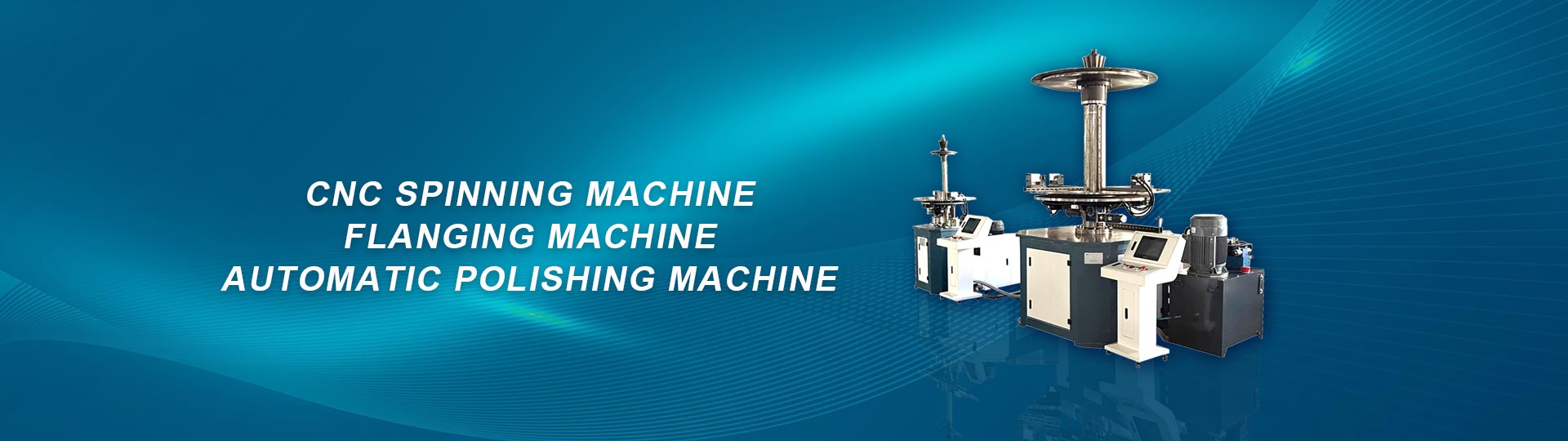
A metal Flanging Machine improves manufacturing efficiency by automating edge forming, reducing manual adjustments, shortening setup time, and producing more consistent components. Advanced CNC and servo configurations can further streamline repeat production and multi-step metalworking operations.
A metal Flanging Machine forms or reshapes the edge of a metal workpiece through controlled mechanical or hydraulic movement. Compared with manual forming, an automated machine can make the process more consistent and reduce repeated operator intervention.
Production efficiency improves in several ways:
Automated forming: Reduces the need for repeated manual edge shaping.
Faster positioning: Mechanized workpiece support and positioning help streamline loading and processing.
Consistent forming operations: Controlled movements help maintain more uniform flange dimensions.
Reduced adjustment time: Stored processing configurations can simplify repeat production.
Integrated functions: Some machines combine flanging with punching, beading, curling, or other operations.
The practical benefit is not simply faster machine movement. It is a more predictable production process with fewer interruptions between workpieces.
CNC control improves efficiency by allowing manufacturers to store and recall processing configurations for compatible workpieces.
On Dading's CNC Flange Flanging Machine, the forming configuration saving function allows operators to recall a stored program when changing workpieces. This reduces repeated debugging and helps maintain consistency between production batches.
Other efficiency-related features include:
Servo-driven workstation movements.
A stepped module for flange-width adjustment.
Cylinder-supported workpieces to provide support during rotation.
Programmable operating configurations.
These features are particularly useful for manufacturers producing multiple batches or switching between compatible product specifications.
Automated flanging reduces the amount of repetitive manual work involved in edge forming. Operators can focus more on loading, monitoring, inspection, and production coordination rather than manually shaping every workpiece.
Machine design also affects rework:
Stable workpiece support: Hydraulic or pneumatic support can reduce radial movement during rotation.
Controlled flange-width adjustment: A stepped adjustment module helps maintain more consistent flange dimensions.
Repeatable settings: Stored configurations reduce differences caused by repeated manual setup.
Integrated processing: Combining compatible operations can reduce workpiece transfers between machines.
However, automation does not eliminate inspection. Material variation, tooling condition, workpiece geometry, and incorrect settings can still affect finished-part quality.
Yes. A multi-function flanging machine can reduce production steps by combining several compatible forming operations in one machine.
Depending on its configuration, equipment may integrate:
Flanging
Punching
Flaring
Beading or curling
Pre-bending
Edge rolling
Dading's Flanging and Beading Machine combines edge forming, punching, crimping, and edge rolling functions. Its published specifications include a processing size range of 250–1,300 mm and a processing thickness range of 0.6–4 mm.
Combining operations can reduce repeated loading and unloading, workpiece transfers, and separate machine setups. Actual efficiency gains depend on the part design and the sequence of operations.
Metal flanging machines are useful in manufacturing processes where cylindrical or shaped metal components require formed edges.
Typical applications include:
Ventilation and HVAC: Fan housings, duct components, and air-handling parts.
Industrial containers: Cylindrical shells and container components.
Automotive manufacturing: Selected metal housings and formed components.
Metal fabrication: Pipes, cylindrical workpieces, and customized metal products.
Pressure vessel production: Components requiring accurately formed edges, subject to applicable design and manufacturing standards.
For example, Dading's pipeline complete machinery combines plate rolling, straight-seam welding, and round-tube flanging equipment. Its flanging equipment is specified for product diameters of 350–1,600 mm and carbon steel thicknesses of 2–6 mm.
This integrated production approach can reduce the need to coordinate separate equipment and manual transfers between forming stages.
The most efficient machine is not necessarily the one with the highest rated power or the most functions. It is the machine that matches the actual workpiece and production process.
Before purchasing, manufacturers should evaluate:
Material and thickness: Confirm the machine's processing capacity for the required metal materials.
Workpiece dimensions: Check the minimum and maximum diameter, height, and other relevant dimensions.
Required forming operations: Determine whether production needs flanging only or additional punching, beading, curling, or pre-bending.
Production volume: Consider batch size, operating shifts, and how frequently specifications change.
Control configuration: Evaluate whether CNC, PLC, servo, or hydraulic systems are appropriate for the required process.
Changeover requirements: Check whether programs can be stored and whether tooling or adjustment modules need to be changed between products.
Manufacturers should provide drawings, material specifications, target flange dimensions, and expected production quantities when requesting a machine proposal.
It can. Automated forming, repeatable positioning, and stored processing configurations can reduce manual operations and setup interruptions. Actual output depends on the workpiece, machine configuration, and production workflow.
CNC systems can store and recall processing configurations, helping reduce repeated manual adjustments and variation between compatible production batches.
Yes. Depending on its design, a machine may combine flanging with punching, beading, curling, flaring, or pre-bending. The available functions vary by model.
Automation can reduce repetitive manual forming and adjustment work. However, operators are still needed for material handling, machine supervision, inspection, and maintenance.
The main requirements include material type, thickness, workpiece diameter, flange dimensions, required operations, production volume, and desired automation level.
A metal flanging machine improves manufacturing efficiency by making edge forming more repeatable, reducing manual adjustments, and integrating compatible production operations. CNC control, servo-driven movements, stored forming configurations, and stable workpiece support can further improve production organization.
For manufacturers handling repeated batches or multiple metal component specifications, selecting a machine around the complete production workflow is more valuable than evaluating forming speed alone.
Explore Dading's metal flanging machine range to review available equipment configurations and discuss production requirements with the manufacturer.