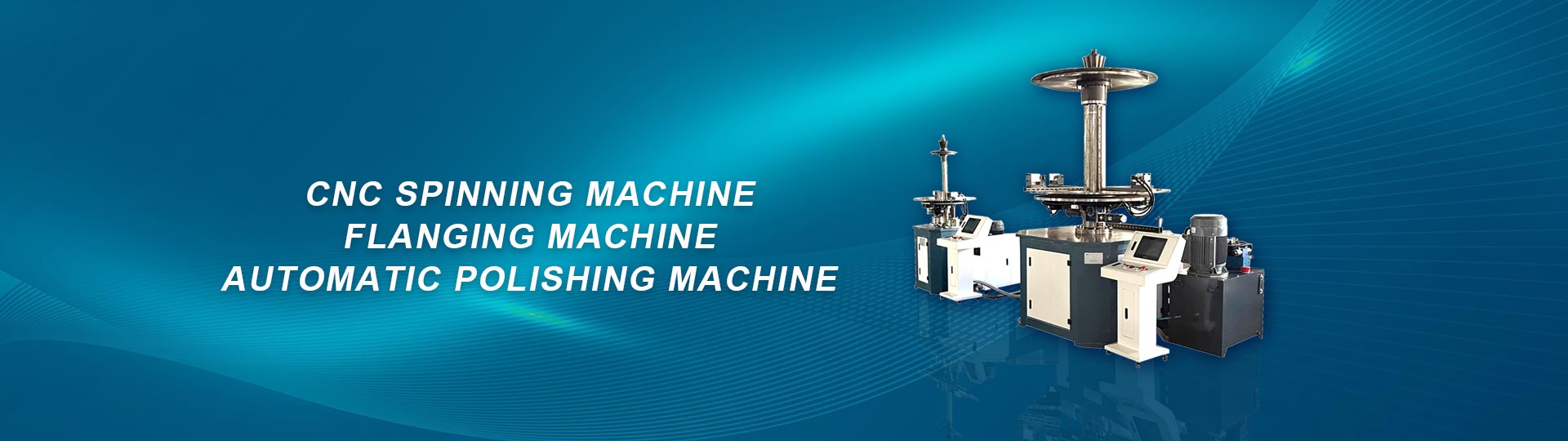
The main difference is that hydraulic describes the machine’s power and forming system, while CNC describes its control method. A Flanging Machine can use hydraulic drive and CNC control together, combining strong forming force with programmable operation.
A hydraulic Flanging Machine uses hydraulic pressure to drive the forming mechanism. Hydraulic cylinders provide the force needed to deform a metal edge and create a flange.
Depending on the machine design, hydraulic systems can support:
Forming thicker or larger metal workpieces.
Maintaining stable pressure during forming.
Supporting cylindrical shells and other large components.
Adjusting forming force to suit different materials and thicknesses.
Hydraulic drive is particularly useful when the forming process requires substantial force. However, the level of automation and repeatability depends on the machine’s control system, positioning method, and configuration.
A CNC flanging machine uses a computer numerical control system to manage machine movements and forming operations according to programmed settings.
Depending on its configuration, a CNC system can provide:
Programmable forming sequences.
Stored processing configurations for repeat orders.
More consistent positioning and flange dimensions.
Faster changeovers between compatible workpiece specifications.
Reduced dependence on repeated manual adjustments.
CNC control is especially valuable when manufacturers process multiple product specifications or require consistent results across production batches.
The key distinction is between how the machine generates force and how it controls the forming process.
| Comparison | Hydraulic Flanging Machine | CNC Flanging Machine |
|---|---|---|
| Core concept | Uses hydraulic pressure to generate forming force | Uses programmed numerical control to manage operations |
| Main function | Provides forming power | Controls movement and processing sequences |
| Operation | May rely on manual, PLC, or other control methods | Uses programmable control |
| Repeatability | Depends on machine design and operator settings | Program storage can improve repeatability |
| Changeover | May require more manual adjustment | Stored configurations can simplify repeat production |
| Best suited for | Applications requiring hydraulic forming force | Production requiring programmable control and consistent processing |
An important technical distinction: hydraulic and CNC are not mutually exclusive machine types. Hydraulic describes the drive system, while CNC describes the control system. A machine can use both technologies at the same time.
Yes. Many industrial flanging machines combine hydraulic drive with CNC or PLC-based control.
This combination allows hydraulic cylinders to provide the forming force while the control system manages the operating sequence, positioning, and stored production settings.
For example, Dading's CNC Flange Flanging Machine uses CNC control and servo-driven workstation movements. Its published specifications include:
Processing diameter: 350–2,000 mm
Processing thickness: 2–6 mm
Total equipment power: 21 kW
Equipment weight: 4.8 tonnes
Control mode: CNC
Hydraulic cylinder support for the workpiece
The machine also features stored forming configurations, allowing operators to recall saved settings when changing workpieces. Its stepped flange-width adjustment module is designed to make flange-width changes more consistent.
This illustrates why buyers should evaluate the drive system and control system separately instead of assuming that every hydraulic machine is manually operated or every CNC machine is electrically driven.
The right choice depends on the workpiece, production volume, forming requirements, and desired level of automation.
The workpiece requires substantial forming force.
Production mainly involves a limited range of specifications.
Hydraulic pressure and forming capacity are major selection priorities.
The required control sequence is relatively straightforward.
Different workpiece specifications are processed regularly.
Repeatable flange dimensions are important.
Production settings need to be stored and recalled.
Reducing setup time and manual adjustment is a priority.
Large or thick metal components require stable forming force.
Production involves repeated batches and specification changes.
Manufacturers need both hydraulic forming capability and programmable operation.
Typical applications include cylindrical metal shells, fan housings, ventilation components, containers, and industrial metal products.
A machine should be selected according to actual production requirements rather than its control-system label alone.
Consider these five factors:
Material and thickness: Confirm whether the machine can process the required carbon steel, stainless steel, or other materials at the specified thickness.
Workpiece diameter: Check the minimum and maximum processing diameters.
Flange dimensions: Verify the required flange height, width, and forming profile.
Production requirements: Consider batch size, product variety, changeover frequency, and repeatability.
Drive and control configuration: Confirm whether the machine uses hydraulic, servo, PLC, or CNC systems and understand what each system controls.
For customized production, manufacturers should provide sample drawings and material specifications before confirming the machine configuration.
No. CNC refers to the control method, not the power source. A CNC flanging machine may use hydraulic, servo-driven, or other mechanical configurations.
Not necessarily. Accuracy depends on the machine structure, positioning components, tooling, control system, and process settings. CNC control can improve repeatability by storing and recalling processing configurations.
Yes. Hydraulic systems generate forming force, while CNC systems manage programmed movements and processing sequences. Combining them can provide both forming capability and automated control.
Yes. Stored programs can help reduce setup work when switching between compatible product specifications. The actual benefit depends on how frequently the products change and how much tooling adjustment is required.
Neither is universally more important. Hydraulic capacity must match the material and forming requirements, while the control system should match the required precision, repeatability, and production flexibility.
Hydraulic and CNC flanging machines should not be treated as two completely separate categories. Hydraulic technology determines how forming force is generated, while CNC technology determines how processing operations are controlled. For manufacturers handling large metal workpieces and repeated production runs, a hydraulic CNC flanging machine can combine forming capacity with programmable operation.
Explore Dading's flanging machine range to review available configurations and discuss equipment requirements with the manufacturer.