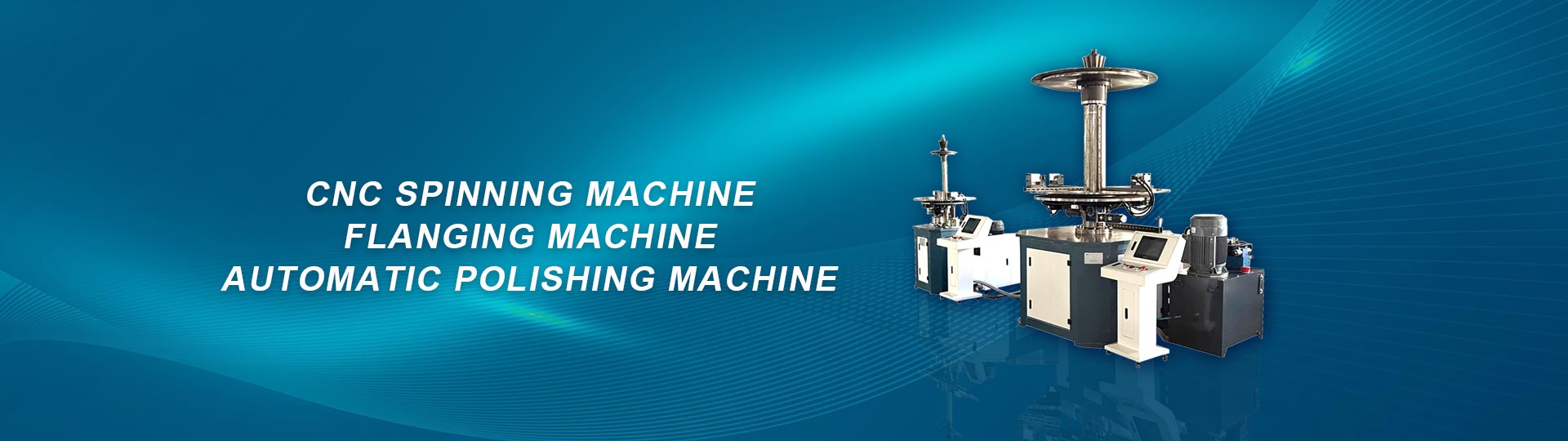
An automatic metal polishing machine uses powered polishing heads, abrasive materials, and controlled workpiece movement to improve metal surface smoothness, consistency, and finish with less manual intervention.
An automatic metal polishing machine is industrial equipment designed to polish metal workpieces through programmed or mechanically controlled movements. It uses polishing wheels, abrasive belts, or other suitable consumables to remove surface imperfections and produce a more uniform finish.
Depending on the machine configuration and polishing materials, the equipment can perform several surface treatment operations, including:
Rough polishing: Removes visible surface marks and minor imperfections.
Fine polishing: Improves surface smoothness and appearance.
Mirror polishing: Produces a highly reflective surface when the material and process allow.
Grinding and deburring: Removes burrs, sharp edges, or excess material before final polishing.
Automatic Polishing Machines are commonly used for stainless steel cookware, bathroom accessories, metal discs, pressure vessel heads, and other manufactured components.
An automatic metal polishing machine works by rotating polishing heads and moving workpieces along a controlled processing path. The machine applies suitable polishing materials and pressure to the target surface to achieve the required finish.
A typical automated polishing process includes five steps:
Workpiece loading: Operators install metal parts onto fixtures or workpiece mounting positions.
Positioning and clamping: The machine secures each workpiece to maintain stable positioning during processing.
Polishing head movement: Motors or pneumatic mechanisms move the polishing heads into the required working positions.
Surface treatment: Polishing wheels or abrasive belts contact the workpiece while it rotates or moves through the processing station. Wax or polishing compounds may be applied automatically when required.
Unloading and inspection: Finished parts are removed and checked for surface consistency, scratches, and other quality requirements.
The exact process depends on the workpiece geometry, polishing consumables, machine structure, and target surface finish.
Although machine designs vary, most automatic metal polishing machines include several essential systems.
Polishing heads: Hold and drive polishing wheels or abrasive belts to treat the metal surface.
Workpiece fixtures: Secure products in the correct position during polishing.
Turntable or feeding system: Moves workpieces between processing positions.
Automatic compensation system: Adjusts polishing head position to compensate for consumable wear on compatible machines.
Wax or polishing compound system: Supplies polishing materials when the process requires them.
Control system: Uses PLC, CNC, or other control arrangements to manage machine movements and processing sequences.
Safety enclosure and dust collection interface: Help manage operator exposure and polishing dust, depending on the machine configuration.
From a manufacturing perspective, these components must work together. A powerful polishing motor alone cannot guarantee a consistent finish if the workpiece fixture, head movement, or consumable compensation is poorly matched to the product.
The main difference is the level of process control and operator involvement. Manual polishing relies heavily on an operator's handling and judgment, while automatic polishing uses mechanical movements and controlled processing parameters to improve repeatability.
| Comparison | Manual Metal Polishing | Automatic Metal Polishing |
|---|---|---|
| Operation | Hand-operated | Mechanically or digitally controlled |
| Labor | High operator involvement | Reduced repetitive manual work |
| Consistency | Depends heavily on operator skill | More repeatable with suitable settings |
| Production capacity | Generally suitable for smaller workloads | Suitable for batch and repeat production |
| Complex workpieces | Flexible for certain custom tasks | Requires suitable fixtures and machine configuration |
| Initial investment | Usually lower | Generally higher |
| Process adjustment | Operator-dependent | Adjusted through machine settings and tooling |
Automatic polishing is particularly useful when manufacturers need to process repeated workpieces with consistent surface requirements. Manual polishing may remain suitable for prototypes, repairs, and products with highly variable geometries.
Automatic metal polishing machines can process different metals when the polishing system, tooling, and machine parameters are suitable.
Common materials include:
Stainless steel: Used for cookware, kitchen equipment, bathroom accessories, and industrial components.
Aluminum: Used for cookware, hardware, decorative parts, and lightweight components.
Carbon steel: Used for selected industrial parts and fabricated products.
Brass and other non-ferrous metals: Used for decorative hardware and components requiring surface finishing.
Typical applications include:
Stainless steel pots, pans, and cookware.
Bathroom accessories and metal fittings.
Metal discs and circular components.
Pressure vessel heads.
Hardware and decorative metal products.
Material compatibility should be confirmed through sample processing because different metals respond differently to abrasive pressure, polishing speed, and consumable selection.
An automatic metal polishing machine can improve production efficiency and surface consistency when the machine is properly matched to the workpiece.
Key advantages include:
Improved production efficiency: Multiple polishing heads or workstations can process parts within an organized production cycle.
More consistent surface finishing: Controlled movement and processing parameters reduce dependence on individual operator technique.
Reduced repetitive labor: Automatic feeding, polishing, and waxing functions can reduce manual intervention.
Better process repeatability: Stored or adjustable settings help manufacturers maintain similar processing conditions across batches.
Flexible polishing configurations: Different wheels, belts, fixtures, and head arrangements can accommodate different surface geometries.
Consumable wear compensation: Compatible systems can automatically adjust polishing head positions as polishing materials wear.
However, automation does not automatically guarantee a mirror finish or eliminate every surface defect. The incoming workpiece condition, material quality, abrasive sequence, and process settings remain important.
Different machine structures are designed for different workpiece shapes and production requirements.
CNC polishing machines use programmed control to coordinate machine movements and polishing operations. They are suitable for applications requiring repeatable processing paths and controlled surface treatment.
These machines use a rotating or intermittently indexed disc to move workpieces between polishing positions. Multiple heads can process different surface areas or stages.
Multi-station machines use several polishing heads and workpiece fixtures to support batch production. Depending on the configuration, different polishing operations can be completed within one production cycle.
These machines are designed around specific workpiece shapes, fixtures, and surface requirements. For example, cookware polishing equipment may use multiple heads and adjustable workpiece rotation to process curved surfaces.
The correct configuration depends on the workpiece dimensions, surface geometry, required finish, and expected production output.
Choosing an automatic polishing machine requires more than comparing motor power or the number of polishing heads. Manufacturers should evaluate the entire production process.
Consider the following factors:
Workpiece shape and dimensions: Confirm whether the machine can accommodate flat, curved, cylindrical, or irregular surfaces.
Material type: Check compatibility with stainless steel, aluminum, carbon steel, or other materials.
Required surface finish: Define whether the application needs grinding, fine polishing, or mirror finishing.
Production volume: Match the number of polishing heads and workstations to the expected output.
Consumable selection: Confirm compatibility with polishing wheels, abrasive belts, cloth wheels, and polishing compounds.
Automation level: Evaluate PLC or CNC control, automatic waxing, feeding, and wear compensation.
Safety and maintenance: Check guarding, dust extraction arrangements, consumable replacement, and access to maintenance components.
A practical selection method is to provide the manufacturer with representative workpieces and finish requirements for a processing evaluation. This helps establish whether the proposed machine configuration can meet actual production needs.
Guangdong Dading Hardware Machinery Co., Ltd. develops and manufactures metal forming and surface treatment equipment. Its automatic polishing machine range includes equipment for cookware, bathroom accessories, metal discs, and pressure vessel heads.
The following Dading machines illustrate different polishing configurations:
Automatic Polishing Machine Range – Explore Dading's automatic polishing equipment for different metal surface treatment applications.
CNC Automatic Disc-Type Polishing Machine for Bathroom Accessories – Designed with a ten-station turntable, seven sanding heads, and PLC programming control. Its configuration supports different sanding and polishing consumables for treating workpiece surfaces.
Multi-Station Automatic Pot Polishing Machine – Uses eight polishing heads, a ten-position turntable, PLC control, and automatic waxing for cookware production.
Automatic Polishing Machine for Pressure Vessel Heads – Uses multiple polishing heads and adjustable processing times to support staged surface treatment.
These machines demonstrate why polishing equipment should be selected according to the actual product rather than a general machine category. Workpiece geometry, fixture design, polishing sequence, and required finish all influence the final configuration.
Its main purpose is to improve metal surface quality through controlled polishing operations. Depending on the configuration, it can remove surface marks, improve smoothness, and produce decorative or reflective finishes.
Yes, suitable machines can produce mirror finishes when the workpiece material, initial surface condition, polishing sequence, and consumables are appropriate. Not every automatic polishing machine is designed for mirror finishing.
Yes. Stainless steel cookware, bathroom accessories, discs, and other components are common applications. The polishing wheel, abrasive material, and processing parameters must match the stainless steel grade and target finish.
Some machines include automatic waxing systems. Wax application can help improve polishing performance and finish consistency, but the required compound depends on the material and polishing process.
This depends on the number of fixtures, workstations, polishing heads, and the processing cycle. For example, Dading's multi-station pot polishing machine is configured with ten workpiece positions, while other models use different arrangements.
No. It reduces repetitive polishing operations and manual handling, but operators are still needed for loading, setup, inspection, consumable replacement, and maintenance.
An automatic metal polishing machine improves surface finishing through controlled polishing heads, workpiece fixtures, and automated processing sequences. For manufacturers handling repeated metal components, the right machine configuration can improve consistency, reduce repetitive labor, and support more efficient production.
Dading provides automatic polishing solutions for cookware, bathroom accessories, pressure vessel heads, and other metal products. Selecting equipment based on actual workpiece samples and finish requirements is the most reliable way to identify a suitable production solution.