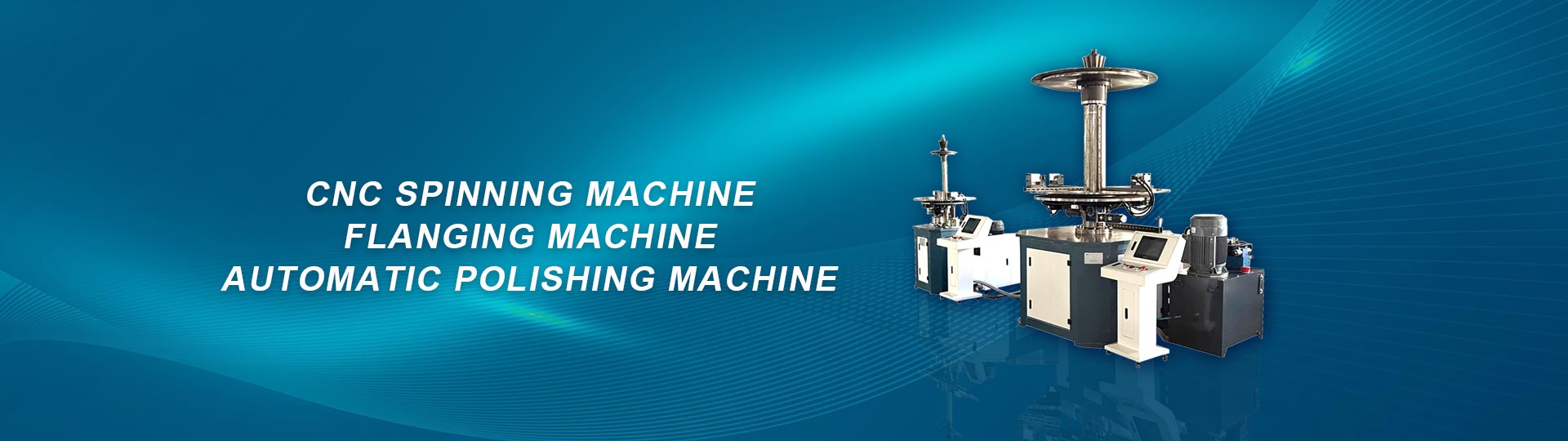
A Flanging Machine is industrial equipment that bends or forms the edge of a metal sheet, plate, pipe, or cylindrical workpiece to create a flange for reinforcement, connection, sealing, or assembly.
A flanging machine is a metal forming machine used to create raised, folded, or outward-turned edges on metal workpieces. The process is called flanging and is widely used in metal fabrication, automotive components, ventilation systems, cookware, and pressure vessel manufacturing.
A flange can serve several purposes:
Structural reinforcement: Strengthens the edge of a metal component.
Connection: Creates an edge suitable for joining or fastening other parts.
Sealing: Provides a formed edge for certain sealing structures.
Assembly: Creates a consistent connection or positioning surface.
Edge finishing: Forms metal edges into the required shape.
Depending on the workpiece and production requirements, flanging machines can process flat sheets, circular plates, pipes, and cylindrical metal components.
A flanging machine works by securing a metal workpiece and applying controlled mechanical or hydraulic force to deform its edge into a specified shape.
A typical automatic flanging process involves five steps:
Workpiece loading: The operator places the metal component onto the machine's support or positioning fixture.
Clamping and positioning: The machine secures the workpiece to prevent unwanted movement during forming.
Parameter setting: The operator selects the required forming program, flange width, processing position, and other relevant parameters.
Edge forming: The forming tool applies controlled pressure while the workpiece or tooling moves to create the required flange.
Inspection and unloading: The finished component is checked for flange dimensions, shape, and surface quality before removal.
The exact working principle depends on the machine structure. Some machines use hydraulic pressure and forming dies, while CNC models coordinate servo-driven movements and rotating workpiece support systems.
For cylindrical workpieces, stable clamping and support are particularly important. Excessive radial movement during rotation can affect flange width and dimensional consistency.
Although different machines have different configurations, an industrial flanging machine generally includes the following components:
Main frame: Supports the machine structure and withstands forming forces.
Drive system: Uses hydraulic cylinders, electric motors, or servo motors to generate and control movement.
Forming tools: Apply pressure to shape the workpiece edge.
Workpiece support: Holds the component in position and reduces movement during processing.
Clamping system: Secures the workpiece during forming.
Control system: Manages processing parameters, movement sequences, and production programs.
Adjustment mechanism: Controls flange width, forming position, or other dimensions depending on machine design.
For CNC flanging equipment, the control system is especially important because it helps store forming configurations and repeat processing settings when changing workpieces.
Flanging machines can be classified according to their drive systems, workpiece geometry, and forming functions.
A hydraulic flanging machine uses hydraulic cylinders to generate forming pressure. It is suitable for applications that require substantial forming force and stable pressure control.
A CNC flanging machine uses programmed control and servo-driven mechanisms to coordinate forming movements. It can store processing configurations, making repeated production and product changeovers more convenient.
An Automatic Flanging Machine reduces manual intervention through controlled positioning, feeding, forming, and other automated functions. Its configuration depends on the production process and workpiece requirements.
This machine combines flanging with beading or other edge-forming operations. Depending on its configuration, it can also perform punching, crimping, and edge rolling.
The appropriate machine depends on the required edge profile, workpiece dimensions, material thickness, and production volume.
Flanging and beading are both metal edge-forming processes, but they produce different shapes and serve different purposes.
| Comparison | Flanging | Beading |
|---|---|---|
| Forming result | Bent or extended metal edge | Raised or recessed rounded ridge |
| Main purpose | Reinforcement, connection, or assembly | Increased rigidity and edge reinforcement |
| Typical shape | Straight, curved, or turned flange | Rounded or shaped bead |
| Common applications | Pipe ends, containers, sheet metal edges | Ducts, cylindrical shells, metal panels |
| Processing method | Bending or forming the edge | Rolling or pressing a bead into the material |
Some industrial machines combine both operations to reduce separate processing steps.
For example, Dading's Flanging and Beading Machine combines edge forming with functions such as punching, crimping, and edge rolling.
A flanging machine can process different metal materials depending on the machine's forming capacity, tooling, and workpiece design.
Common materials include:
Stainless steel: Used for containers, industrial components, kitchen equipment, and pipe fittings.
Carbon steel: Used for fabricated structures, ducts, and industrial metal products.
Aluminum: Used for lightweight housings, ventilation components, and formed metal parts.
Other ductile metals: Can be processed when their material properties and thickness are compatible with the equipment.
Material thickness is an important selection factor. Thicker or higher-strength materials generally require greater forming force and suitable tooling.
Manufacturers should also consider material ductility, edge geometry, forming radius, and the possibility of cracking or wrinkling during processing.
Flanging machines are used across multiple manufacturing industries to produce components with formed edges.
Common applications include:
Pipes and pipe fittings: Forming pipe ends for connections and assembly.
Metal cylinders: Creating formed edges for containers and cylindrical products.
Pressure vessel components: Processing selected vessel parts and connection edges.
Ventilation ducts: Forming edges for duct connections and assembly.
Fan housings: Producing flanged edges and other formed features.
Industrial containers: Improving edge strength and supporting component assembly.
Vibrating screen shells: Forming, punching, and reinforcing selected cylindrical components.
The required machine configuration varies according to workpiece diameter, material thickness, flange dimensions, and the number of forming operations.
An automatic CNC flanging machine can improve production consistency and reduce repetitive adjustment when processing standardized metal components.
Its main advantages include:
Repeatable forming: Stored processing programs help maintain consistent production settings.
Improved dimensional control: Servo-driven movements can provide controlled positioning and indexing.
Reduced setup time: Operators can recall saved configurations when changing workpieces on compatible machines.
Stable workpiece support: Hydraulic or pneumatic support mechanisms help reduce radial movement during rotation.
Adjustable flange width: Dedicated adjustment mechanisms help maintain the required forming dimensions.
Combined processing functions: Selected configurations can integrate flanging, punching, crimping, and other operations.
From a manufacturing perspective, automation is most valuable when it addresses specific production problems. For example, reducing workpiece movement and preserving forming parameters can help improve consistency across repeated batches.
However, the final forming quality still depends on material properties, tooling design, machine adjustment, and workpiece positioning.
Selecting a suitable flanging machine requires matching the equipment to the actual workpiece and production process.
Consider these seven factors:
Workpiece dimensions: Confirm the minimum and maximum processing diameters or overall dimensions.
Material thickness: Check whether the machine supports the required material thickness and strength.
Material type: Consider stainless steel, carbon steel, aluminum, and other materials.
Flange specifications: Define flange width, angle, profile, and dimensional tolerances.
Processing functions: Determine whether the production process also requires punching, beading, crimping, or edge rolling.
Automation requirements: Evaluate CNC control, servo drives, stored programs, and automatic positioning.
Production volume: Match machine capacity and processing speed to expected output.
A practical approach is to provide the machine manufacturer with workpiece drawings, material specifications, and representative samples. This allows the forming process and machine configuration to be evaluated against actual production requirements.
Guangdong Dading Hardware Machinery Co., Ltd. manufactures metal forming equipment, including CNC and automatic flanging machines for industrial production.
Dading's flanging equipment range includes the following solutions:
Dading Flanging Machine Range – Explore different flanging machine configurations for metal forming applications.
Automatic Flanging Machine – This CNC model supports processing dimensions of 250–1,300 mm and material thicknesses of 0.6–4 mm. Its published configuration includes servo-driven workstations, stored forming programs, and hydraulic workpiece support.
Flange Flanging Machine – This CNC model has a published processing dimension range of 350–2,000 mm and material thickness capacity of 2–6 mm. It uses servo-driven workstation movement and a stepped flange-width adjustment mechanism.
Flanging and Beading Machine – Combines edge forming, punching, crimping, and edge rolling. Its published processing dimensions are 250–1,300 mm, with a material thickness range of 0.6–4 mm.
These models illustrate different production configurations rather than a universal solution for every workpiece. Actual suitability should be confirmed according to material type, forming requirements, and workpiece drawings.
A flanging machine forms the edge of a metal workpiece to improve rigidity, create connection surfaces, support assembly, or produce specific edge profiles.
A CNC flanging machine uses programmed control to coordinate workpiece positioning and forming movements. Depending on its configuration, servo motors and support mechanisms help control processing positions and improve repeatability.
A flanging machine is designed specifically to form edges or flanges on metal workpieces. A press brake uses a punch and die to bend sheet metal along a straight line. Their applications and tooling arrangements are different.
Yes. Stainless steel can be processed when the machine's forming force, tooling, material thickness, and forming parameters are suitable. Pre-bending and stable workpiece support can also help improve forming results in certain applications.
Some multifunctional models can combine flanging with punching, crimping, edge rolling, or other operations. These functions depend on the machine's tooling and configuration.
Manufacturers should provide workpiece drawings, material type, thickness, processing diameter, flange dimensions, required operations, and expected production volume. These details help determine the appropriate machine configuration.
A flanging machine forms metal edges into specific profiles for reinforcement, connection, and assembly. By using controlled forming force, suitable tooling, and stable workpiece positioning, it helps manufacturers produce consistent metal components.
For industrial production, CNC and automatic flanging machines can improve repeatability and reduce setup adjustments. Dading provides different flanging solutions for cylindrical components, metal containers, pipes, and other formed products, with machine selection based on actual workpiece and production requirements.