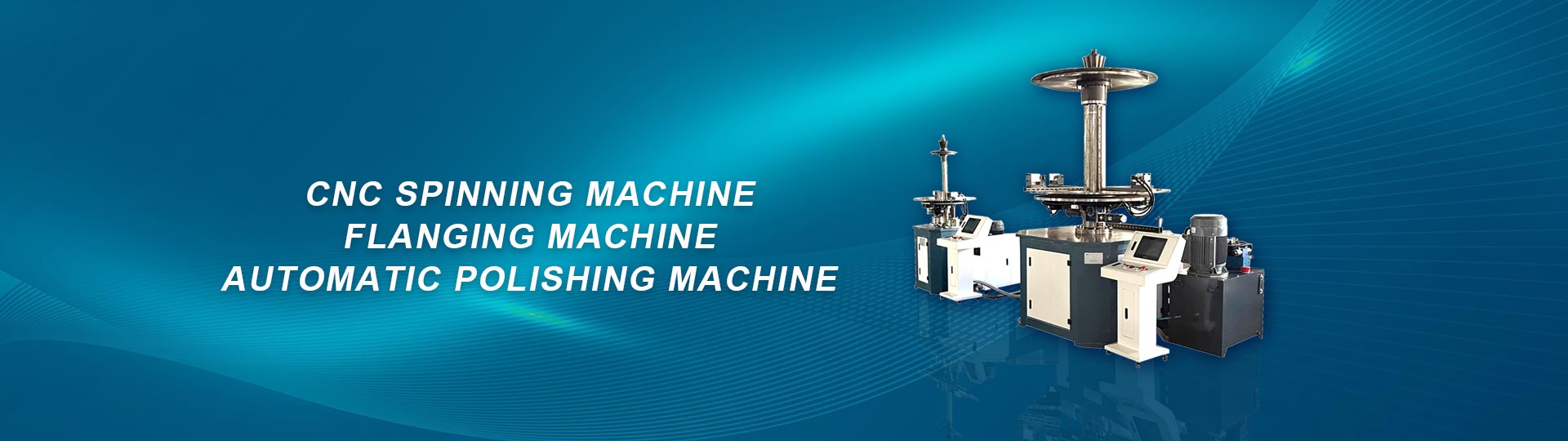
Metal spinning can process many ductile sheet metals, including aluminum, stainless steel, mild steel, copper, and brass. Titanium and nickel alloys can also be spun with specialized equipment and process controls.
Metal spinning is a forming process that transforms a flat metal blank into a hollow, axisymmetric component.
During the process, a circular metal blank is clamped against a rotating mandrel. A forming roller gradually applies pressure to move the metal over the mandrel until it reaches the required shape.
Common spun products include:
Metal cones and cylinders
Reflectors and lighting components
Cookware and kitchenware
Pressure vessel components
Metal covers and housings
Automotive and industrial components
The suitability of a material depends on its ductility, elongation, work-hardening behavior, thickness, and forming condition.
From a manufacturing perspective, material selection should be based on both the finished product requirements and the forming machine's actual processing capabilities.
Several metal families are widely used in conventional and CNC metal spinning. Each offers different advantages and forming requirements.
Common aluminum alloys include 1100, 3003, and 5052, although their formability varies by alloy and temper.
Typical applications include:
Lighting reflectors and housings
Cookware and kitchen equipment
Decorative metal components
Automotive parts
Industrial covers and enclosures
Manufacturing considerations: Aluminum is generally easy to form, but the selected alloy and temper are important. Some heat-treated or high-strength aluminum grades may have lower formability and require larger forming radii or carefully controlled forming passes.
Stainless steel is widely used when corrosion resistance, durability, and surface appearance are important.
Common grades include 304 and 316 stainless steel. Other grades may be suitable depending on the application and forming requirements.
Typical applications include:
Kitchenware and cookware
Food-processing equipment
Industrial containers
Pressure vessel components
Decorative metal products
Manufacturing considerations: Stainless steel generally requires greater forming force than softer materials and can work-harden during repeated deformation. Appropriate roller pressure, forming speed, tooling condition, and intermediate annealing when necessary help reduce the risk of cracking.
Mild steel is a practical option for metal spinning because of its availability, strength, and relatively good formability.
Common applications include:
Industrial metal housings
Cylindrical containers
Automotive components
Equipment covers
Structural and mechanical parts
Manufacturing considerations: Low-carbon steel is generally easier to spin than higher-strength carbon steel. As material strength and thickness increase, the required forming force also increases. Machine rigidity, roller pressure, and workpiece support should be evaluated before production.
Copper offers excellent ductility, electrical conductivity, and thermal conductivity. Its appearance also makes it suitable for decorative products.
Typical applications include:
Lighting components
Decorative bowls and vessels
Electrical components
Heat-transfer parts
Musical instrument components
Manufacturing considerations: Copper is relatively easy to deform, but it can work-harden during repeated forming. For complex shapes or multiple forming stages, intermediate annealing may be necessary. Its surface can also be easily marked, so suitable tooling and surface protection are important.
Brass is a copper-zinc alloy known for its attractive appearance, corrosion resistance, and good formability in suitable grades.
Common applications include:
Decorative metal products
Lighting fixtures
Hardware components
Musical instrument parts
Household accessories
Manufacturing considerations: Brass formability depends on its zinc content, alloy composition, and material condition. Some grades are easier to spin than others, so the specific alloy should be confirmed before selecting forming parameters.
Titanium and nickel-based alloys can be processed through specialized metal spinning techniques, particularly for demanding industrial and aerospace applications.
Typical applications include:
Aerospace components
High-temperature equipment
Chemical-processing components
Specialized pressure vessel parts
Manufacturing considerations: These materials can require higher forming forces, specialized tooling, temperature control, and carefully designed forming sequences. Heat-assisted spinning may be necessary for certain high-strength alloys or complex geometries.
They should not be treated as ordinary materials for standard CNC spinning machines. Equipment suitability must be confirmed for the specific alloy and forming process.
In general, softer metals with higher ductility and lower work-hardening rates are easier to spin.
A practical comparison is shown below:
| Material | General Formability | Main Considerations |
|---|---|---|
| Aluminum | Good to excellent, depending on alloy and temper | Lightweight; alloy condition affects cracking risk |
| Copper | Excellent in suitable conditions | Work-hardening and surface protection |
| Brass | Good, depending on alloy | Composition affects forming behavior |
| Mild steel | Good | Requires more forming force than softer metals |
| Stainless steel | Moderate to good, depending on grade | Work-hardening and springback |
| Titanium | Specialized | May require heat-assisted forming |
| Nickel alloys | Specialized | High forming resistance and process complexity |
This comparison is a general manufacturing guide, not a universal material ranking. Actual results depend on alloy grade, temper, thickness, component geometry, and machine configuration.
Not every sheet metal is equally suitable for spinning. Several material properties directly affect forming performance.
Ductility describes a material's ability to deform without cracking.
Materials with good ductility can undergo the bending and stretching involved in metal spinning more easily.
Elongation indicates how much a material can stretch before fracture.
Higher elongation is generally beneficial for forming complex shapes, although it should be evaluated alongside other mechanical properties.
Some metals become stronger and harder as they undergo plastic deformation.
Excessive work-hardening can reduce the material's remaining formability. Multiple forming passes or intermediate annealing may be required for demanding parts.
Thicker blanks generally require greater forming force and more rigid machine structures.
Thickness also affects the forming sequence, roller geometry, and achievable component dimensions.
The same metal family can have significantly different forming characteristics.
For example, annealed aluminum generally behaves differently from a precipitation-hardened aluminum alloy. Stainless steel grades also vary in strength, elongation, and work-hardening behavior.
Therefore, material specifications should include the exact grade and temper rather than simply stating aluminum or stainless steel.
Yes. CNC metal spinning machines can process different metal materials when the machine structure, tooling, and forming parameters are suitable.
However, material compatibility should not be assumed across every machine model.
Dading's CNC Spinning Machine range includes equipment designed for different metal-forming applications.
For example:
DD-XY-600-1 Standard CNC Spinning Machine: Designed for small and thin products made from aluminum, iron, and copper.
Horizontal CNC Spinning Machine: The published product description identifies iron, aluminum, and stainless steel as suitable materials. Its stated iron plate processing thickness is up to 3.0 mm.
DD-XY-3000-2 Head CNC Spinning Machine: Designed for larger spun components and a wide range of shapes and contours.
The exact material and thickness capabilities depend on the selected machine configuration. These examples should not be interpreted as a guarantee that every model can process every listed metal.
Material selection influences machine settings, tooling requirements, production efficiency, and finished component quality.
| Material Factor | Effect on Production | Manufacturing Consideration |
|---|---|---|
| High ductility | Generally supports easier deformation | Suitable forming passes and roller pressure |
| High strength | Increases forming resistance | Machine rigidity and drive capacity |
| High work-hardening rate | Can reduce remaining formability | Controlled passes and possible annealing |
| Greater thickness | Requires higher forming force | Machine capacity and workpiece support |
| Surface sensitivity | Increases the risk of visible marks | Tooling finish and surface protection |
| Complex alloy composition | Changes forming behavior | Material testing and process validation |
A common mistake in equipment selection is to focus only on the maximum workpiece diameter or thickness. In practice, material grade, temper, shape complexity, and forming depth can be equally important.
Manufacturers should evaluate these factors together before confirming a machine configuration.
Different materials are selected according to the performance and appearance required by the finished component.
| Material | Typical Spun Products | Main Selection Reason |
|---|---|---|
| Aluminum | Reflectors, cookware, lighting housings | Lightweight and formable |
| Stainless steel | Cookware, containers, industrial components | Corrosion resistance and durability |
| Mild steel | Equipment housings, industrial covers | Strength and cost-effectiveness |
| Copper | Decorative products, lighting parts | Ductility and conductivity |
| Brass | Decorative fixtures, hardware | Appearance and formability |
| Titanium | Specialized industrial and aerospace parts | High strength-to-weight ratio and corrosion resistance |
| Nickel alloys | High-temperature industrial components | Specialized high-temperature performance |
Yes. Aluminum is widely used in metal spinning because of its relatively low weight and good formability. Suitable alloy grades and tempers should be selected according to the component design.
Yes. Stainless steel grades such as 304 and 316 can be spun. However, stainless steel generally requires higher forming forces and may need intermediate annealing for demanding forming operations.
Yes. Both copper and brass are suitable for many metal spinning applications. Their formability depends on alloy composition, material condition, and the complexity of the finished component.
Yes, but titanium spinning generally requires specialized process conditions and equipment. Depending on the grade and component geometry, heat-assisted forming may be necessary.
Metal spinning can process certain thicker steel blanks, but the machine must provide sufficient rigidity, forming force, and workpiece support. The maximum workable thickness depends on material strength, diameter, and part geometry.
Conventional metal spinning can produce some local thickness variation due to material flow and deformation. Shear spinning, also called flow forming in certain configurations, is specifically used when controlled wall-thickness reduction is required.
Some CNC spinning machines support both materials, but the available processing range depends on machine capacity, tooling, and material thickness. Each material requires suitable forming parameters and process validation.
The best material for metal spinning depends on the finished product's strength, weight, corrosion resistance, appearance, operating environment, and production cost.
Aluminum, stainless steel, mild steel, copper, and brass are common choices for industrial spinning applications. Titanium and nickel alloys require more specialized manufacturing conditions.
Dading's CNC Spinning Machine range includes solutions for different metal-forming requirements.
As a metal-forming machinery manufacturer, Dading recommends evaluating the exact material grade, temper, blank thickness, workpiece diameter, and target shape before selecting equipment. Providing material specifications and product drawings makes it easier to assess machine suitability and develop a reliable forming process.