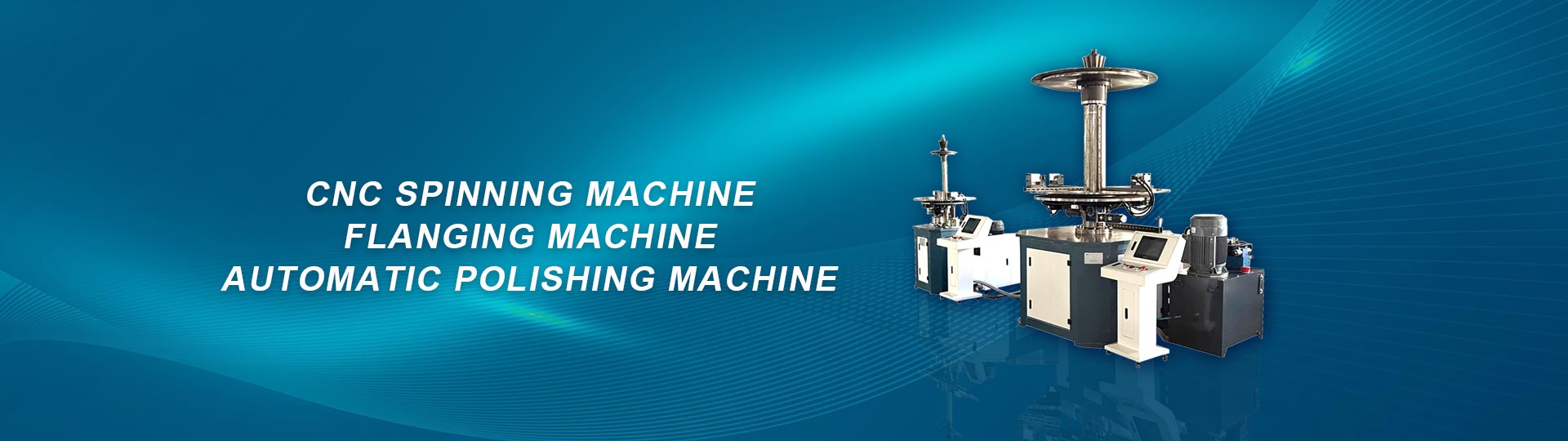
CNC polishing improves metal surface quality by controlling tool paths, polishing movements, processing speed, and contact positions. It helps produce more consistent surface finishes, reduce manual variation, and support repeatable processing of complex metal components.
CNC polishing uses computer-controlled movements to guide polishing or abrasive tools across a metal workpiece. Instead of relying entirely on an operator's hand movements, the machine follows programmed processing paths and parameters.
A typical CNC surface-finishing process includes:
Workpiece positioning: The metal component is secured using a suitable fixture.
Program setup: Processing paths, movement directions, and operating parameters are configured.
Tool selection: Suitable polishing wheels, abrasive belts, or other consumables are selected according to the material and desired finish.
Controlled processing: The CNC system guides the tool along the programmed path.
Surface inspection: The finished component is checked for scratches, texture consistency, gloss, and dimensional requirements.
The main advantage is controlled and repeatable tool movement. This is particularly valuable when components have curved surfaces, irregular profiles, or specific surface-texture requirements.
CNC polishing can improve surface quality in several important ways.
Manual polishing can produce variations because operators may apply different pressure, movement speeds, and processing times.
CNC-controlled paths help standardize tool movement and processing sequences. When the workpiece, consumables, and parameters remain consistent, repeated parts can achieve more uniform surface textures.
Metal components often contain curves, edges, recessed areas, and irregular profiles. A fixed polishing direction may not reach every required surface effectively.
Programmable tool paths can include straight lines, arcs, multiple connected arcs, and other curves, depending on the machine configuration.
Dading's Venturi Valve CNC Drawing Machine supports G-code programming and different tool-path shapes. It is designed for surface drawing and texture processing on irregular hardware components.
CNC control reduces dependence on continuous manual tool guidance. Once a suitable program and process setup have been established, the same processing sequence can be reused for recurring production.
This can help manufacturers reduce operator-to-operator variation and make quality control more manageable.
The movement path, processing speed, and tool positioning influence how abrasives interact with the workpiece.
A properly configured CNC process can help control the polishing area and reduce inconsistent contact. However, final surface quality still depends on abrasive selection, material condition, tooling, and process parameters.
CNC polishing and related abrasive finishing processes can help address several common surface problems.
| Surface issue | How controlled finishing helps |
|---|---|
| Uneven surface texture | Maintains a more consistent tool path |
| Visible scratches | Uses appropriate abrasive stages to refine the surface |
| Irregular brushed patterns | Controls the direction and movement of abrasive tools |
| Localized surface marks | Improves tool positioning and processing coverage |
| Inconsistent gloss | Helps standardize processing conditions |
| Surface roughness | Removes or refines surface irregularities when the process is properly selected |
CNC polishing does not automatically eliminate every defect. Deep scratches, dents, weld defects, and material imperfections may require preliminary grinding, repair, or additional finishing stages.
The correct process should be selected according to the initial surface condition and the required final appearance.
The main difference is how the polishing movement and processing sequence are controlled.
| Comparison | CNC polishing | Manual polishing |
|---|---|---|
| Tool movement | Programmed or controlled movements | Guided directly by the operator |
| Repeatability | Higher potential for consistent repeated paths | More dependent on operator skill |
| Complex profiles | Can follow programmed paths within machine capability | Requires manual adaptation |
| Production consistency | Easier to standardize recurring processes | Can vary between operators |
| Setup | Requires programming and process adjustment | Often requires less programming |
| Flexibility | Depends on machine configuration and programming | Convenient for irregular one-off work |
Manual polishing remains useful for prototypes, repairs, and small quantities of customized components.
CNC polishing is more suitable when manufacturers need repeatable processing paths, consistent surface patterns, or controlled finishing of complex workpieces.
CNC-controlled surface finishing can be useful across industries where appearance, texture consistency, and repeatability are important.
Typical applications include:
Kitchenware: Stainless steel pots, pans, teapots, and other cookware.
Bathroom hardware: Metal fittings and decorative accessories with curved surfaces.
Ventilation components: Venturi valves and irregular stainless steel hardware.
Furniture hardware: Decorative panels, handles, and metal accessories.
Industrial components: Special-shaped metal parts requiring consistent surface drawing or finishing.
Dading's CNC Polishing Machine range includes equipment for specialized metal surface-treatment applications.
For cookware production, Dading also lists a CNC automatic cookware polishing solution designed for curved-surface mirror finishing. Its described configuration includes G-code programming, servo drives, stepless workpiece speed control, and automatic polishing-wheel compensation.
The required surface finish should determine the machine configuration. A brushed texture, satin appearance, and mirror finish involve different abrasive sequences and processing requirements.
Two important factors in CNC surface finishing are the programmed tool path and the management of consumable wear.
A programmed path determines where and how the polishing or abrasive tool moves across the workpiece.
Depending on the machine, the program may control:
Tool movement direction
Processing trajectory
Feed speed
Spindle speed
Processing sequence
Movement limits and safety conditions
Dading's Venturi Valve CNC Drawing Machine supports G-code programming, servo drive, and the storage and reuse of processing parameters.
These functions are particularly useful when manufacturers need to reproduce specific surface textures on recurring product models.
Polishing wheels gradually wear during operation. As their effective diameter and contact position change, the relationship between the tool and workpiece can also change.
Automatic compensation adjusts the polishing head position according to the machine's configured compensation method.
Dading's YP-8 Cookware Fully Automatic Polishing Machine includes automatic polishing-wheel compensation and eight polishing heads. Its turntable provides 20–24 workpiece installation positions.
Automatic compensation can help maintain more consistent contact conditions, but it does not replace consumable inspection, process monitoring, or finished-part quality checks.
A CNC polishing process should be evaluated using measurable surface-quality requirements rather than appearance alone.
Important inspection criteria include:
Surface roughness (Ra): Measures average surface-profile deviation and helps quantify surface texture.
Gloss and reflectivity: Useful when a bright or mirror-like finish is required.
Surface texture direction: Important for brushed stainless steel and decorative components.
Scratch visibility: Helps identify defects that remain after polishing.
Dimensional consistency: Ensures that finishing does not excessively alter critical dimensions or edges.
Part-to-part consistency: Checks whether repeated production produces comparable results.
The inspection method should match the product's application and acceptance criteria. For example, a decorative stainless steel panel may require visual and gloss inspection, while a functional component may also need dimensional and roughness measurements.
A practical approach is to establish a reference sample, define acceptable surface standards, and compare production parts against those standards.
Selecting CNC polishing equipment requires more than checking the number of axes or the presence of a CNC controller. The machine must match the actual workpiece and finishing objective.
Before choosing a solution, manufacturers should prepare:
Workpiece drawings and dimensions.
Metal material and incoming surface condition.
Required finish, such as brushed, satin, or mirror.
Areas and surfaces that need processing.
Expected production volume.
Required processing consistency and inspection standards.
Suitable abrasive consumables and fixture arrangements.
Dading recommends evaluating equipment using representative workpieces whenever possible. A sample-finishing trial can reveal whether the programmed path reaches the required surfaces and whether the selected abrasive process achieves the expected appearance.
Explore the Dading CNC Polishing Machine category and discuss the workpiece requirements with the equipment manufacturer.
The key principle is that CNC control improves the consistency of the process, but it does not independently guarantee a perfect finish. Material condition, abrasive selection, tool contact, machine rigidity, and process validation remain essential.
Yes. With suitable abrasives and processing parameters, CNC-controlled polishing can reduce surface irregularities and improve surface roughness. The achievable result depends on the initial condition and finishing process.
Yes. CNC polishing can support mirror finishing when the machine, polishing consumables, workpiece geometry, and abrasive sequence are suitable. Multiple finishing stages may be necessary.
CNC polishing can provide more repeatable tool movements and processing sequences. However, final dimensional and surface accuracy also depend on machine capability, fixture stability, consumables, and process setup.
Yes. Suitable CNC equipment can follow programmed paths across curved and irregular surfaces within its working range. Tool orientation, fixture design, and accessible processing areas must be evaluated.
No. Operators are still needed to select abrasives, configure programs, set up fixtures, monitor the process, inspect finished parts, and maintain equipment.
CNC polishing generally focuses on refining surface texture, reducing irregularities, or achieving a specified finish. CNC surface drawing creates a controlled directional texture or grain pattern. Both can use programmed tool paths, but their abrasive processes and finishing objectives differ.
CNC polishing improves metal surface quality by making tool movement and processing conditions more controllable and repeatable. When the machine configuration, abrasive system, and finishing requirements are properly matched, manufacturers can achieve more consistent surface textures and more reliable production results.