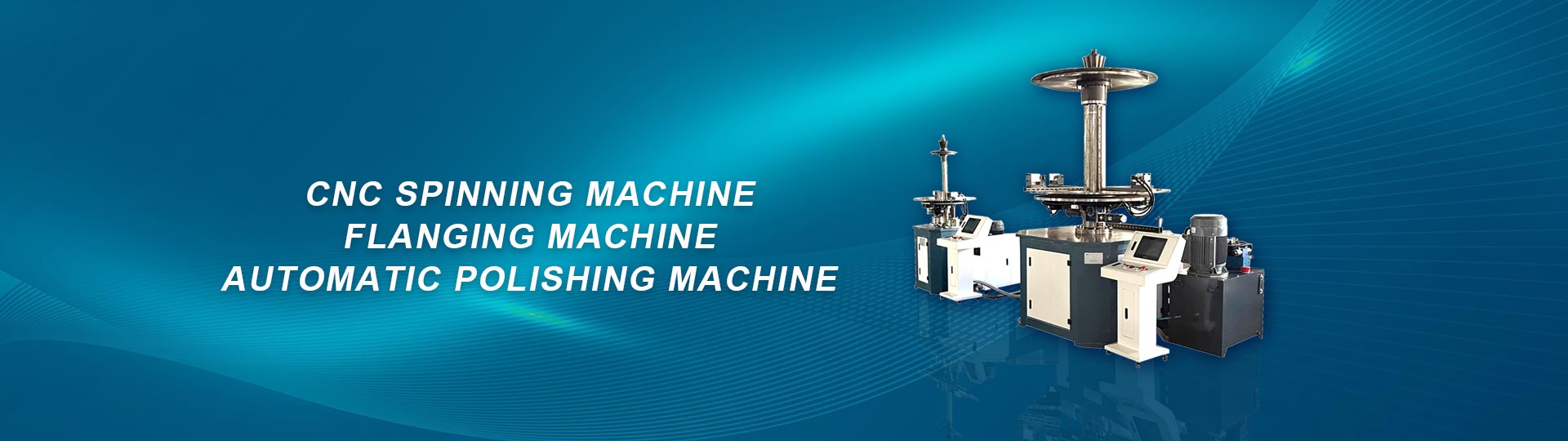
Metal spinning is a metal forming process that uses pressure rollers to shape a rotating metal blank over a mandrel, producing hollow, seamless, and rotationally symmetrical components.
Metal spinning, also known as spin forming, is a manufacturing process used to transform flat metal sheets or preformed blanks into three-dimensional shapes.
During the process, a circular metal blank rotates against a forming mandrel while a spinning roller applies controlled pressure. The material gradually takes the shape of the mandrel without requiring the entire workpiece to be cut or removed.
Unlike conventional machining, metal spinning primarily reshapes existing material through controlled plastic deformation.
Common metal spinning shapes include:
Cylindrical components
Conical parts
Hemispherical shells
Parabolic components
Bell-shaped products
Other custom rotationally symmetrical parts
Metal spinning is widely used in lighting, cookware, automotive components, industrial equipment, and hardware manufacturing.
Metal spinning works by rotating a metal blank and gradually pressing it against a mandrel using a forming roller.
The typical manufacturing process includes five steps.
A circular metal sheet is cut according to the required product diameter and material thickness.
Common materials include aluminum, stainless steel, copper, and mild steel. The selected material must have suitable ductility for the intended forming operation.
The metal blank is positioned against a mandrel, which determines the internal shape and basic geometry of the finished component.
The workpiece is secured using a suitable clamping system to maintain stability during rotation.
The spindle drives the mandrel and metal blank at a controlled speed.
Rotational speed depends on material properties, workpiece dimensions, thickness, and forming requirements.
A spinning roller gradually presses the rotating blank against the mandrel.
The roller follows a controlled movement path, forming the material through one or multiple passes until the required contour is achieved.
For CNC metal spinning, the control system manages roller movement and forming parameters to improve repeatability and dimensional consistency.
After forming, the component may require additional operations such as trimming, flanging, curling, or edge rolling.
The finished product is inspected for dimensions, surface quality, wall thickness, and overall shape accuracy.
Metal spinning is suitable for manufacturing a wide range of hollow products with circular or rotationally symmetrical geometries.
The following are some of its most common industrial applications.
Metal spinning is widely used to manufacture lighting housings, lamp reflectors, lampshades, and other rotationally symmetrical lighting components.
Aluminum is commonly selected because of its lightweight properties and formability.
Dading's CNC Spinning Machines include equipment designed for lighting-related metal forming applications.
Metal spinning can produce stainless steel and aluminum cookware components, including pots, bowls, and other hollow kitchenware products.
The process helps create smooth curved surfaces and consistent product geometries.
For cookware manufacturers, selecting suitable forming equipment depends on product diameter, material thickness, shape, and production volume.
Certain automotive components, such as metal covers, housings, and specially shaped cylindrical parts, can be manufactured through metal spinning.
The process is particularly useful when the component requires a symmetrical shape and controlled material deformation.
Industrial applications include protective covers, equipment housings, metal shells, and selected pressure vessel components.
Depending on the design and material specifications, metal spinning can produce cylindrical, conical, and curved metal structures.
Pressure-bearing applications require appropriate engineering design, material qualification, and inspection rather than relying on forming capability alone.
Metal spinning is also suitable for custom hardware products, ventilation components, pipe fittings, and other specially shaped metal parts.
Its flexibility makes it useful for manufacturers producing different product designs or customized components.
Metal spinning can process different metals depending on their ductility, thickness, strength, and the machine's forming capacity.
| Material | Common Applications | Key Characteristics |
|---|---|---|
| Aluminum | Lighting, cookware, housings | Lightweight and highly formable |
| Stainless Steel | Kitchenware, industrial components | Corrosion resistance and strength |
| Mild Steel | Hardware, industrial shells | Strength and versatility |
| Copper | Electrical and decorative components | Good conductivity and formability |
Not every material or thickness is suitable for every Spinning Machine. Material grade, workpiece diameter, forming depth, and roller pressure must be considered during equipment selection.
The main difference is how the forming roller is controlled.
| Comparison | Manual Metal Spinning | CNC Metal Spinning |
|---|---|---|
| Roller movement | Operator-controlled | Program-controlled |
| Production consistency | Depends heavily on operator skill | More repeatable with proper programming |
| Labor requirements | Higher manual involvement | Reduced manual forming |
| Production suitability | Custom and small-volume work | Repeat and batch production |
| Process adjustment | Manual adjustment | Program and parameter adjustment |
| Complex contours | Depends on operator experience | Controlled through programmed tool paths |
CNC metal spinning is particularly suitable for manufacturers that need repeatable production, more consistent product dimensions, and flexible manufacturing capabilities.
Metal spinning offers several manufacturing advantages.
Because metal spinning reshapes an existing blank rather than removing large amounts of material, it can achieve efficient material utilization.
Actual savings depend on product geometry, blank design, trimming requirements, and process conditions.
By changing the mandrel and adjusting the forming path, manufacturers can produce different shapes and dimensions without redesigning an entirely new production system.
Metal spinning can produce seamless hollow components from a single metal blank, making it suitable for products where a circumferential welded seam is undesirable.
Compared with some high-volume stamping processes, metal spinning may require less complex tooling, especially for customized products and smaller production batches.
CNC systems control the roller movement and forming sequence, helping manufacturers achieve more repeatable results across production runs.
Metal spinning and metal stamping are both metal forming processes, but they use different manufacturing methods.
| Comparison | Metal Spinning | Metal Stamping |
|---|---|---|
| Forming method | Rotating blank and pressure rollers | Press and matched dies |
| Typical products | Hollow, symmetrical components | Flat and three-dimensional stamped parts |
| Tooling | Mandrel and forming rollers | Stamping dies |
| Production flexibility | Suitable for varied shapes | Depends on die design |
| Production volume | Custom, small, medium, and selected large batches | Particularly suitable for high-volume production |
Metal spinning is often a practical choice for hollow symmetrical products, while stamping is more appropriate for parts designed around press-forming operations.
The best process depends on product geometry, material, production quantity, and cost requirements.
Choosing the right metal spinning machine requires evaluating the actual product rather than selecting equipment based only on price or machine size.
Manufacturers should consider six important factors:
1. Maximum Product Diameter
The machine must accommodate the largest required blank and finished workpiece.
2. Material Type
Aluminum, stainless steel, copper, and steel have different forming characteristics. The machine must provide sufficient forming capacity for the selected material.
3. Material Thickness
Confirm the machine's specified processing thickness for each material. A machine that handles a particular aluminum thickness may not handle the same thickness of stainless steel.
4. Product Geometry
Cylindrical, conical, parabolic, and deep-forming products may require different mandrel designs, roller configurations, and machine structures.
5. Production Volume
For repeated production, CNC control can help improve consistency and reduce dependence on manual roller movement.
6. Additional Processing Requirements
If the product also requires trimming, flanging, crimping, or rolling, consider whether these operations can be integrated into the selected machine.
At Dading Machine, equipment selection is based on workpiece dimensions, material specifications, product geometry, and production requirements. This approach helps manufacturers match machine capabilities with their actual forming applications.
A CNC metal spinning machine is an automated forming machine that uses computer-controlled rollers to shape rotating metal blanks over a mandrel.
Compared with manual spinning, CNC equipment provides more controlled roller movement and repeatable forming paths.
Dading offers different CNC Spinning Machine configurations for different production requirements:
DD-XY-600-1 Standard CNC Spinning Machine – Designed for smaller and thinner metal products.
CNC Single Tool Type Spinning Machine – Suitable for lighting, cookware, and other rotationally symmetrical components.
CNC Heavy Duty Spinning Machine – Designed for applications requiring greater forming capacity.
DD-3000-2 Large CNC Spinning Machine – Suitable for larger workpieces and demanding metal forming applications.
Different models have different maximum processing diameters, material thickness capacities, and configurations. Actual suitability should be confirmed against the product drawings and material specifications.
Yes. Metal spinning can support batch and mass production, particularly when CNC equipment is used to control forming paths and maintain consistent product dimensions.
Yes. Metal spinning can form hollow components from a single metal blank without requiring a circumferential welded seam.
Yes. Stainless steel can be processed through metal spinning when its grade, thickness, ductility, and forming requirements are compatible with the machine.
Metal spinning is a metal forming process that reshapes a rotating metal blank through pressure. Spin welding is a joining process that uses rotational friction to bond components. They are different manufacturing processes.
CNC metal spinning generally offers better process repeatability because roller movements follow programmed paths. Actual dimensional accuracy depends on machine condition, tooling, programming, material properties, and process control.
Metal spinning is an effective metal forming method for manufacturing hollow, seamless, and rotationally symmetrical components. It is widely applicable to lighting, cookware, automotive parts, industrial equipment, and custom hardware products.
For manufacturers handling multiple product designs or requiring consistent batch production, CNC metal spinning offers additional flexibility through programmable forming operations.
Dading Machine provides different CNC Spinning Machine models to accommodate varying workpiece sizes, material thicknesses, and production requirements.
Selecting the right equipment starts with understanding the product geometry, material specifications, and expected production capacity.
Contact Dading Machine to discuss your metal spinning requirements and find a suitable CNC forming solution.