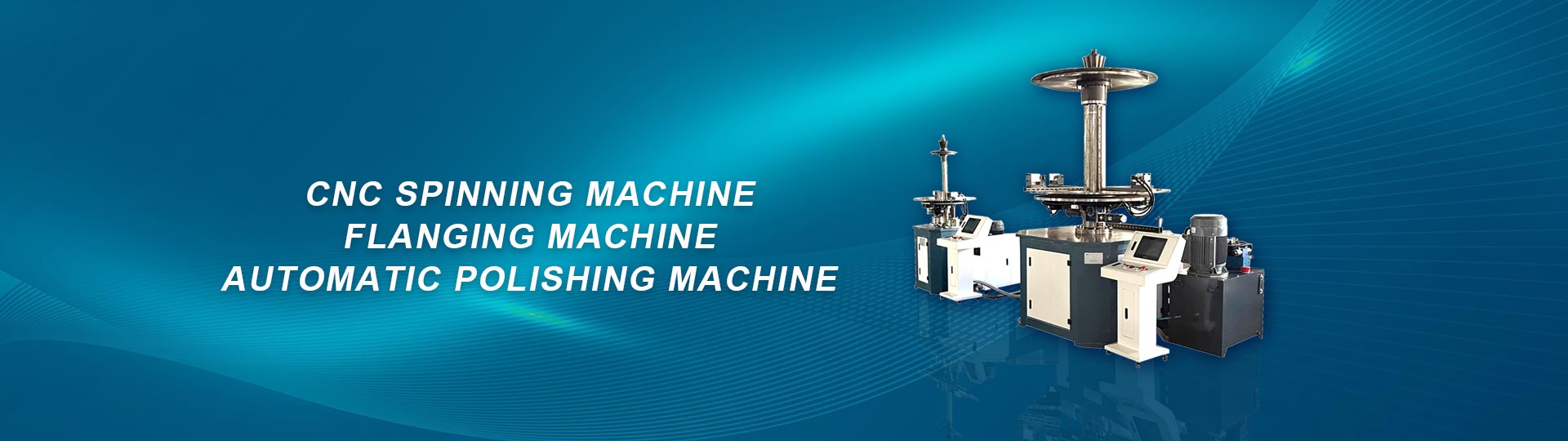
A corrugated forming machine is industrial equipment that creates repeated ridges and grooves on metal workpieces, such as cylindrical tubes, to manufacture metal bellows and expansion joints.
A corrugated forming machine is a type of metal forming equipment designed to produce regular waves or corrugations on metal components. In industrial manufacturing, it is commonly used to transform smooth cylindrical metal blanks into corrugated structures.
These corrugations create a flexible structure that can accommodate movement, vibration, and thermal expansion in suitable applications.
Common products manufactured with corrugated forming machines include:
Metal expansion joints: Absorb thermal expansion and movement in piping systems.
Metal bellows: Provide flexibility in industrial equipment and mechanical assemblies.
Corrugated stainless steel components: Used in selected industrial piping and equipment applications.
Vibrating screen cylinders: Require formed corrugated surfaces for specific equipment structures.
Industrial compensators: Accommodate movement and dimensional changes in connected systems.
It is important to distinguish metal corrugated forming machines from cardboard corrugators and roofing sheet roll-forming machines. Dading's equipment is designed for metal forming, particularly cylindrical corrugated components and expansion joint production.
A corrugated forming machine works by applying controlled mechanical or hydraulic force to a metal tube or cylindrical blank, creating a series of evenly spaced ridges and grooves.
A typical metal bellows forming process involves five steps:
Blank preparation: Metal sheet or strip is cut and formed into a cylindrical shape. The longitudinal seam is welded to create a closed tube when a welded blank is used.
Workpiece positioning: The cylindrical blank is installed and secured in the forming machine.
Parameter setting: Operators configure the required corrugation height, spacing, number of waves, and other forming parameters.
Corrugation forming: The machine applies mechanical expansion or another suitable forming method to create repeated waves around the cylindrical workpiece.
Inspection and finishing: The finished component is checked for corrugation dimensions, shape consistency, and surface defects before subsequent processing.
The exact process depends on the machine design, material properties, workpiece diameter, wall thickness, and required corrugation profile.
For manufacturers, the key production consideration is not simply forming the waves. Corrugation height, pitch, wall thickness, and dimensional consistency must all match the final component's functional requirements.
Corrugated forming machines can be classified according to their forming methods and intended applications.
Mechanical forming machines use forming tools and controlled mechanical movement to create corrugations in cylindrical metal blanks.
They are commonly used for metal bellows and expansion joint production. Their tooling configuration determines the achievable corrugation geometry.
Hydraulic forming machines use controlled fluid pressure to expand a metal tube against forming tools or a mold.
This method can produce corrugated structures while distributing forming pressure across the workpiece. The process must be matched to the material and required geometry.
Automatic machines use programmed controls to manage forming sequences and processing parameters. Depending on the configuration, operators can set corrugation dimensions and production requirements through a control interface.
These machines are suitable for repeated production where consistent forming conditions are important.
Large-diameter machines are designed for cylindrical blanks with greater diameters and specific corrugation requirements.
They are used in applications such as industrial expansion joints and large metal compensators.
Corrugated forming is the broader process of creating repeated ridges and grooves on a material. Corrugated expanding specifically describes a forming approach that expands a cylindrical metal workpiece to produce the required corrugated profile.
| Comparison | Corrugated Forming | Corrugated Expanding |
|---|---|---|
| Meaning | General process of creating corrugations | A specific expansion-based forming process |
| Workpiece | Depends on machine design | Commonly cylindrical metal blanks |
| Forming method | Mechanical, hydraulic, or other forming methods | Controlled expansion using suitable tooling |
| Main objective | Produce a corrugated profile | Expand a cylindrical blank into a corrugated structure |
| Applications | Bellows, compensators, and other corrugated components | Metal bellows and expansion joint production |
The terminology may overlap in equipment catalogs. Therefore, manufacturers should evaluate the actual forming mechanism and finished workpiece rather than relying only on the machine's product name.
Corrugated forming machines can process different metals when their mechanical properties and thickness are compatible with the equipment.
Common materials include:
Stainless steel: Widely used for metal bellows and expansion joints because of its corrosion resistance and formability.
Carbon steel: Used in selected industrial components where material strength and service conditions are suitable.
Other formable alloys: Can be processed depending on their ductility, strength, and forming requirements.
Material selection is especially important for bellows manufacturing. The metal must withstand repeated deformation without excessive thinning, cracking, or other forming defects.
Before choosing equipment, manufacturers should confirm:
Material grade and mechanical properties.
Initial tube or blank thickness.
Workpiece diameter and length.
Required corrugation height and pitch.
Number of corrugations.
Final operating conditions of the component.
Corrugated forming machines are primarily used to manufacture components that require flexibility or controlled deformation.
Metal expansion joints use corrugated bellows to accommodate thermal expansion, contraction, vibration, and movement in piping systems.
Metal bellows are flexible cylindrical components used in mechanical systems, industrial equipment, and selected pressure or temperature applications.
Compensators use corrugated structures to absorb movement and reduce stress in connected equipment or piping arrangements.
Selected vibrating screen components use corrugated cylindrical structures to meet specific structural and equipment requirements.
Other industrial products may require corrugated surfaces for flexibility, reinforcement, or functional design purposes.
The final product application determines the required corrugation profile, material, dimensions, and manufacturing tolerances.
Corrugations allow a metal bellows to flex more easily than a smooth cylindrical tube of comparable construction.
The repeated ridges and grooves create a flexible structure that can accommodate certain types of movement.
Their main functions include:
Axial movement: Allowing the bellows to compress or extend along its length.
Lateral movement: Accommodating selected sideways displacement.
Angular movement: Allowing limited angular deflection in suitable designs.
Vibration absorption: Helping isolate or accommodate equipment vibration.
Thermal expansion compensation: Supporting movement caused by temperature changes in connected systems.
However, the number, height, pitch, and geometry of corrugations affect the component's flexibility and mechanical performance.
A higher corrugation does not automatically mean better performance. The finished bellows must be designed and tested according to its pressure, temperature, movement, fatigue life, and operating requirements.
An automatic corrugated forming machine can improve production repeatability and reduce manual adjustment when manufacturing standardized metal bellows and expansion joint components.
Key advantages include:
Controlled corrugation dimensions: Programmable parameters help maintain the required forming geometry.
Improved production consistency: Automatic forming sequences reduce variation caused by repeated manual adjustments.
Reduced setup time: Touchscreen or PLC controls can simplify parameter configuration.
Flexible production settings: Compatible machines can adjust corrugation height and the number of corrugations.
Reduced manual intervention: Automated forming sequences can reduce repetitive operator tasks.
Suitable for different diameters: Different machine models can accommodate different cylindrical workpiece sizes.
From a manufacturing perspective, the most important advantage is repeatability. A stable forming process helps manufacturers maintain consistent corrugation geometry across production batches.
Actual performance still depends on material quality, tooling condition, machine capacity, and parameter settings.
Selecting a suitable corrugated forming machine requires matching the equipment to the finished product and its operating requirements.
Consider these seven factors:
Workpiece diameter: Confirm the minimum and maximum cylindrical blank diameters.
Material thickness: Check the machine's capacity for the required metal thickness and number of layers.
Corrugation height: Define the required wave height and confirm that the machine can achieve it.
Corrugation pitch: Specify the distance between adjacent corrugations.
Number of corrugations: Confirm whether the machine can produce the required number of waves.
Automation level: Evaluate PLC control, touchscreen operation, and programmable forming parameters.
Production requirements: Consider expected output, product changeovers, tooling, and maintenance.
A practical selection process should begin with a finished-product drawing and representative cylindrical blank. These details allow the equipment manufacturer to evaluate forming capacity and the required machine configuration.
For metal expansion joints, pressure, temperature, movement range, and fatigue requirements should also be considered during product design.
Guangdong Dading Hardware Machinery Co., Ltd. manufactures metal forming equipment, including corrugated forming and expanding machines for industrial metal components.
Dading's equipment range includes solutions for metal bellows, expansion joints, and large cylindrical corrugated workpieces.
Relevant models include:
Dading Corrugated Forming Machine Range – Explore corrugated forming equipment for different metal workpieces.
DD-1300 Bellows Expansion Joint Forming Machine – An automatic PLC-controlled machine using mechanical expansion forming. Its published product description states that it can produce different metal bellows from DN100 mm to DN6000 mm.
2500 Corrugated Expanding Machine – Designed for cylindrical workpieces with processing diameters of 900–2,500 mm. Its published specifications include a corrugation height of up to 150 mm and PLC control.
Flanging Corrugated Expanding Machine – Combines corrugated expanding and flanging-related processing. Its published specifications include a processing diameter of 300–1,300 mm and corrugation height of up to 50 mm.
These machines serve different workpiece sizes and production requirements. Their published specifications should be checked against the actual material, blank dimensions, corrugation profile, and finished-product design before selection.
It is mainly used to create repeated ridges and grooves on metal workpieces. Common applications include metal bellows, expansion joints, industrial compensators, and selected cylindrical components.
It applies controlled mechanical or hydraulic forming force to a cylindrical metal blank. The forming tools expand or reshape the tube to produce repeated ridges and grooves.
A metal corrugated forming machine creates corrugations in metal workpieces, such as stainless steel tubes. A cardboard corrugator uses heated rollers and adhesive to produce corrugated paperboard for packaging.
Yes. Stainless steel is commonly used for metal bellows and expansion joints. The machine must be suitable for the material grade, thickness, diameter, and required corrugation geometry.
Mechanical forming uses mechanical tooling and movement to create corrugations. Hydraulic forming uses controlled internal fluid pressure to expand the tube against forming tools. The appropriate method depends on the workpiece geometry, material, and production requirements.
Manufacturers should provide material grade, tube diameter, wall thickness, workpiece length, corrugation height, pitch, number of waves, and expected production volume. Finished-product drawings are also useful for evaluating machine suitability.
A corrugated forming machine creates repeated ridges and grooves on metal workpieces to manufacture flexible components such as metal bellows and expansion joints. It uses controlled mechanical or hydraulic forming methods to achieve the required corrugation geometry.
For manufacturers producing industrial compensators and cylindrical metal components, selecting equipment according to workpiece diameter, material thickness, corrugation dimensions, and production requirements is essential. Dading provides different corrugated forming and expanding solutions for these manufacturing applications.