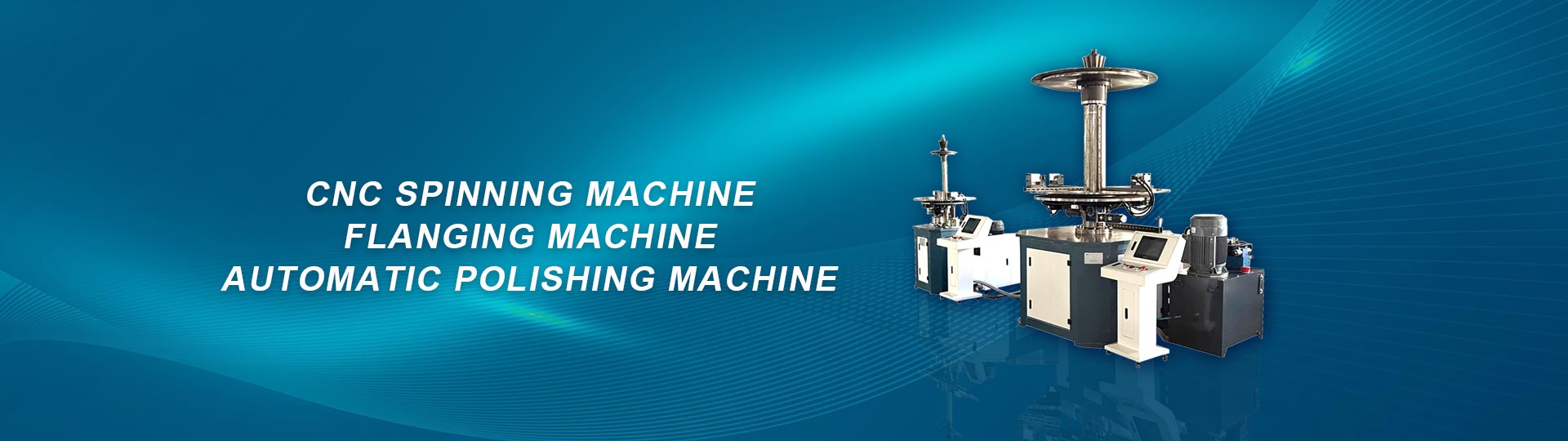
To choose the right CNC metal Spinning Machine, evaluate your workpiece diameter, material type, thickness, product shape, production volume, and required accuracy. The machine’s working capacity and configuration should match your actual manufacturing requirements.
The most important factors are the dimensions of your products, the materials being processed, production requirements, and the machine’s technical capabilities.
Before selecting equipment, manufacturers should evaluate the following:
Maximum workpiece diameter: Confirm that the machine can accommodate the largest blank and finished product.
Material type: Consider whether the production materials include aluminum, stainless steel, mild steel, copper, or other metals.
Material thickness: Check the machine’s rated spinning capacity for each material.
Product geometry: Identify whether the parts are cylindrical, conical, hemispherical, parabolic, or irregularly shaped.
Production volume: Determine whether the machine is intended for prototyping, small-batch manufacturing, or continuous production.
Processing accuracy: Evaluate positioning accuracy, repeatability, and the dimensional requirements of finished parts.
Automation requirements: Consider CNC programming, servo drives, automatic operation, and tool-position configurations.
A common purchasing mistake is selecting a machine based only on its maximum diameter. Diameter capacity alone does not establish whether the machine can reliably form a particular material, thickness, and product profile.
Machine capacity should be determined by the largest and most demanding products in the planned production range.
The maximum spinning diameter determines the size range of workpieces that can be processed. Manufacturers should consider the original sheet blank diameter, finished product dimensions, and available working space.
For example:
A machine with a 650 mm maximum spinning diameter may suit smaller lighting components and cookware.
A 1,200 mm machine may be more appropriate for larger cookware, industrial components, and formed metal shells.
A 3,000 mm machine may be considered for large-diameter components and specialized industrial production.
The required capacity should include a practical allowance for future product variations rather than being based on only one current product.
Different metals require different forming forces and processing conditions. Aluminum is generally easier to form than many stainless steel grades, while thicker or higher-strength materials can require greater machine rigidity and forming capacity.
The following Dading machine specifications illustrate why material-specific capacity matters:
| Dading CNC machine | Maximum diameter | Iron plate | Aluminum plate | Stainless steel |
|---|---|---|---|---|
| Standard CNC Spinning Machine | 650 mm | 2 mm | 3 mm | 1.2 mm |
| CNC Single Tool Type | 1,200 mm | 3 mm | 6 mm | 2 mm |
| CNC Heavy Duty | Check product configuration | 5 mm | 10 mm | 3 mm |
These figures are published product specifications, not universal processing limits for every alloy or product geometry. Actual forming capability should be confirmed against the material grade, blank diameter, profile, and required wall thickness.
Explore Dading's CNC Metal Spinning Machine range to compare available configurations.
Different machine configurations serve different production requirements. The appropriate choice depends on product size, forming complexity, material thickness, and the number of operations required.
A standard CNC spinning machine is suitable for manufacturers producing relatively small or medium-sized rotationally symmetrical components.
Typical applications include:
Lighting components
Metal cookware
Decorative metal products
Small cylindrical and conical parts
Dading's CNC Spinning Machine supports CAD-based programming, parameter storage, and servo-controlled movement. Its published maximum spinning diameter is 650 mm.
A single-tool configuration can be suitable for manufacturers requiring a larger working range and flexible forming operations.
Dading's CNC Single Tool Type Spinning Machine has a published maximum spinning diameter of 1,200 mm. Its listed material capacities are 3 mm for iron plate, 6 mm for aluminum plate, and 2 mm for stainless steel.
The machine also supports trimming, flanging, crimping, indentation, and rolling operations.
For thicker materials and demanding forming applications, a heavy-duty configuration may be more appropriate.
Dading's CNC Heavy Duty Spinning Machine lists processing capacities of up to 5 mm for iron plate, 10 mm for aluminum plate, and 3 mm for stainless steel. It also features hydraulic pressing and six tool positions.
The actual machine selection should still be verified against the intended product dimensions and forming process.
Manufacturers producing large-diameter metal components may need a machine with a larger working envelope.
Dading's DD-3000-2 Large CNC Spinning Machine has a published maximum sheet diameter of 3,000 mm. Its listed material thickness ranges are 0.5–5.0 mm for aluminum alloy, 0.5–3.0 mm for low-carbon steel, and 0.5–2.0 mm for stainless steel.
This configuration is designed for large workpieces that exceed the capacity of standard-sized spinning equipment.
The CNC control system determines how the spinning roller moves along the programmed forming path. Servo drives help control the machine's movement and positioning during production.
When comparing machines, manufacturers should examine:
CAD programming: Whether product drawings and forming paths can be created or imported.
Parameter storage: Whether processing parameters and programs can be saved and reused.
Servo control: Whether the machine provides controlled and repeatable axis movement.
Positioning accuracy: Whether the published positioning performance meets the product's dimensional requirements.
Safety functions: Whether the equipment includes travel limits, fault detection, alarms, and overload protection.
For example, Dading's CNC spinning machine supports CAD drawing and programming, parameter editing and storage, and automatic fault detection. Its published positioning accuracy is 0.02 mm.
However, positioning accuracy should not be confused with the final dimensional tolerance of a spun component. Finished-part accuracy also depends on material properties, tooling, workpiece geometry, machine setup, and process parameters.
Production volume influences the required automation level, tooling arrangement, and machine configuration.
For prototyping and small-batch manufacturing, flexibility is often more important than maximum production speed.
A suitable machine should support convenient program adjustments, flexible tooling, and different product profiles.
For regular production of multiple product models, CNC programming and parameter storage can help reduce repeated setup work and improve process consistency.
Manufacturers should also consider tool-position configurations and the time required to change molds.
For larger production runs, evaluate:
Automatic program execution
Repeatability between workpieces
Tooling changeover time
Loading and unloading arrangements
Maintenance requirements
Operator training and production support
The highest-capacity machine is not automatically the most productive choice. A machine that closely matches the actual workpiece range and production cycle may provide better overall manufacturing efficiency.
Beyond the main specifications, several practical details can affect whether a CNC spinning machine is suitable for long-term production.
Tooling compatibility: Confirm whether existing molds can be used or whether new mandrels and forming tools are required.
Multi-process capability: Check whether trimming, flanging, rolling, and crimping can be completed on the same machine when these operations are part of the production process.
Machine rigidity: The frame, spindle, guideways, and pressing structure should be suitable for the expected forming loads.
Safety protection: Confirm the availability of protective covers, travel limits, alarms, and overload protection.
After-sales support: Discuss installation, commissioning, operator training, spare parts, and technical assistance before placing an order.
Factory acceptance testing: Where possible, provide representative materials and product drawings for a forming trial. Evaluate the finished part's dimensions, surface quality, wall thickness, and repeatability before confirming the machine configuration.
Dading offers CNC metal spinning machines in different sizes and configurations for lighting, cookware, hardware, industrial components, and other metal-forming applications.
The selection process should begin with the actual production requirements rather than a general preference for a particular machine model.
A practical evaluation should include:
Identify the largest blank diameter and finished product dimensions.
Confirm the material grades and maximum thickness.
Provide product drawings or representative samples.
Define the required product shapes and forming operations.
Estimate production volume and changeover frequency.
Confirm the required CNC functions, tooling, and safety configuration.
Request a technical evaluation or sample-forming trial.
Visit the Dading CNC Spinning Machine category to review available equipment and discuss a suitable configuration with the manufacturer.
Choose a machine based on the largest blank diameter, finished product dimensions, forming depth, and required working clearance. The machine should also have sufficient capacity for the material thickness and product profile.
Depending on its configuration, a CNC metal spinning machine can process aluminum, stainless steel, mild steel, copper, and other suitable metals. Material compatibility and maximum thickness must be checked against the specific machine model.
No. Heavy-duty machines are designed for more demanding forming requirements, but they may involve higher equipment and operating costs. A standard or medium-capacity machine can be more suitable when the products are smaller or made from thinner materials.
The main differences generally involve forming capacity, machine structure, working dimensions, and available tooling configurations. Heavy-duty models are designed for thicker materials and more demanding applications, while standard models are suitable for lighter production requirements.
Yes. A CNC spinning machine can produce different rotationally symmetrical profiles by changing the mandrel, tooling, and programmed forming path. Its flexibility depends on the machine's working range and available processing functions.
Manufacturers should prepare product drawings or samples, material specifications, blank diameter, thickness, finished dimensions, required tolerances, expected production volume, and any additional operations. These details help the equipment manufacturer recommend a more appropriate machine configuration.
Choosing a CNC metal spinning machine is ultimately a process of matching machine capacity, forming technology, and automation features to real production requirements. A properly evaluated configuration can help manufacturers improve forming consistency, reduce unnecessary equipment investment, and build a more flexible metal-forming production line.